Key takeaways
- Dust gently with a soft, dry brush. Never use water, sprays or cleaners.
- Keep paintings out of strong direct sunlight.
- Avoid heat sources, damp rooms and sudden temperature swings.
- A protective varnish, like the one on all of Svitlana's paintings, adds a valuable layer of defense.
Acrylic is one of the most durable painting media ever invented. Once dry, it forms a flexible, water-resistant film that doesn't yellow the way some older oil varnishes did. With minimal care, an acrylic painting on canvas will look beautiful for generations.
Light: the most important factor
Ultraviolet light is the main long-term risk to any painting. Professional paints are rated for lightfastness, and varnish helps, but years of strong direct sunlight can still dull colors.
- Hang paintings on walls that receive indirect or filtered light.
- Use sheer curtains or UV-filtering window film in very bright rooms.
- LED bulbs emit very little UV and are ideal for lighting art.
How to dust a painting
- Use a soft, clean, dry brush, such as a wide natural-hair paintbrush or makeup brush.
- Work gently from top to bottom, following the texture.
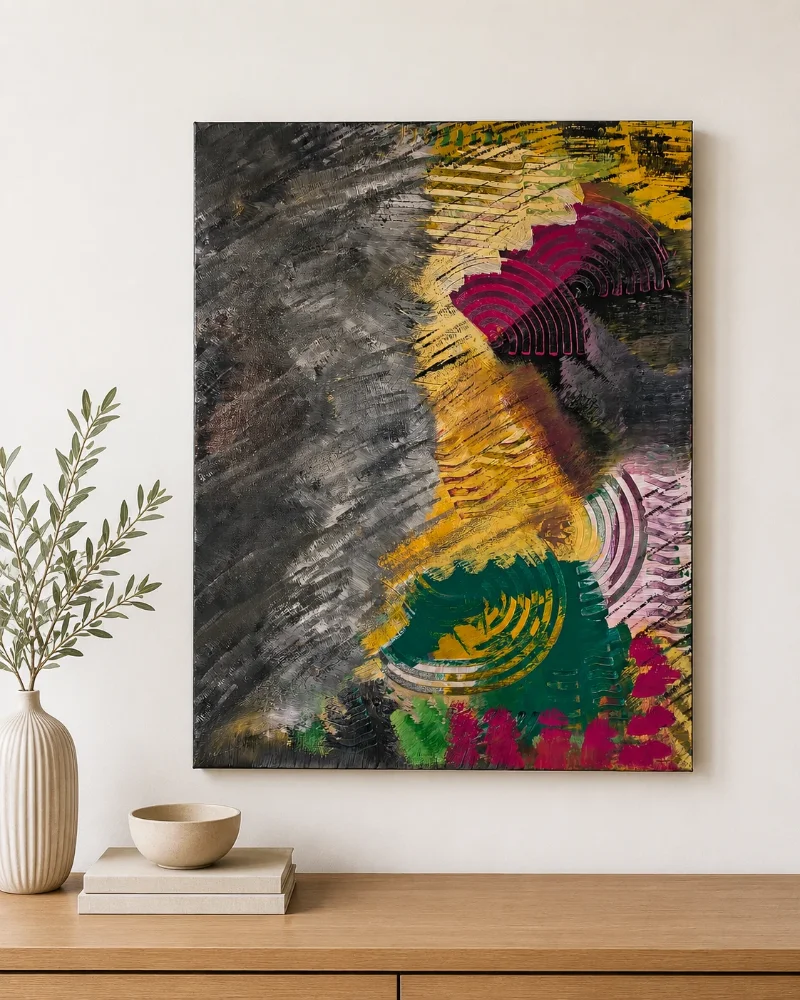
- For heavily textured surfaces with impasto or combed ridges, let the bristles reach into the grooves; don't press.
- Dust every month or two, or whenever you notice a film.
Water, glass cleaner, furniture polish, baby wipes, feather dusters (which can snag) or microfiber cloths dragged across a textured surface.
Temperature and humidity
Canvas and wooden stretcher bars respond to humidity, slackening in damp air and tightening in dry air. Comfortable household conditions are perfect. Avoid:
- Hanging directly above radiators, heaters or a fireplace that runs hot.
- Unventilated bathrooms, laundry rooms and damp basements.
- Exterior walls that get very cold in a Michigan winter, if you notice condensation.
Handling a painting
Hold a canvas by its sides with clean, dry hands, never by the top edge or with fingers pressing on the back of the canvas (which can leave dents). Carry it upright.
Storing a painting
- Store upright, never flat with weight on top.
- Wrap in clean, acid-free tissue or a cotton sheet, not plastic, which can trap moisture.
- Choose a climate-controlled interior closet, not an attic, garage or basement.
Why varnish matters
A final varnish layer protects the paint film from dust, airborne grime and UV light, and it evens out the sheen so the colors look rich and unified. Every painting by Svitlana Morhunov is varnished to protect its colors.
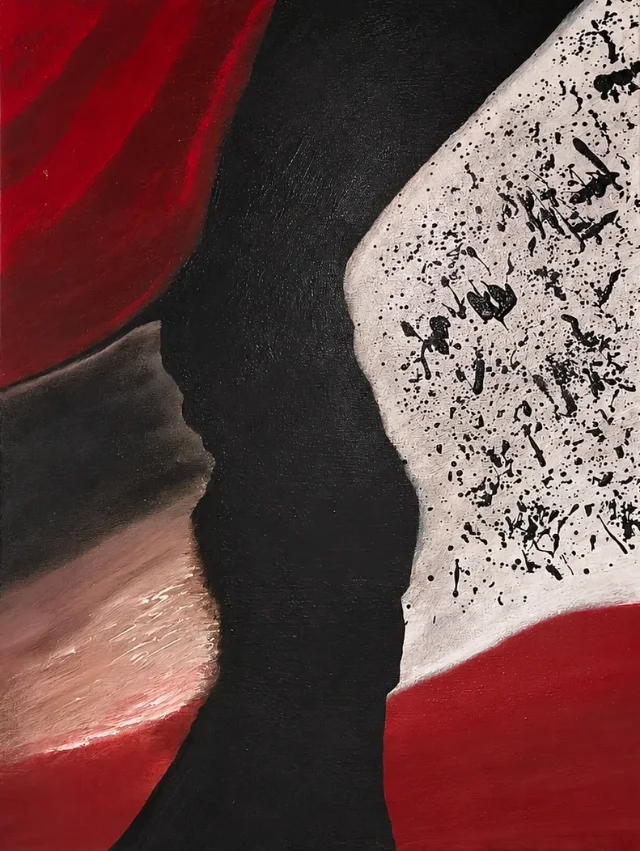 Original paintingThe ConversationAcrylic on canvas, 18 × 24 in · $180
View the painting →
Your care checklist
For significant damage such as a tear, dent or water exposure, contact a professional painting conservator rather than attempting a repair.
Frequently asked questions
Can I clean an acrylic painting with water?
Avoid it. Even on a varnished painting, water and household cleaners can damage the surface. Dust gently with a soft, dry brush instead, and consult a professional conservator for anything more.
Will my acrylic painting fade?
Professional acrylic paints have good lightfastness, and a protective varnish adds UV resistance, but any painting can fade in prolonged direct sunlight. Hang it where it gets indirect light.
What temperature and humidity are best for paintings?
Normal, comfortable household conditions are ideal. Avoid sudden swings and extremes, such as directly above a heater or in a damp basement.
Is a varnished painting waterproof?
No. Varnish protects against dust, moisture in the air and UV light, but a painting should never be wiped with water or cleaning products.