Key takeaways
- Decide the feeling you want first: energizing, calm, warm or contemplative.
- Warm colors energize; cool colors calm.
- Echo one color from the room for harmony, or contrast for a bold focal point.
- Choose with your heart first, then confirm size and placement.
Abstract art is the most flexible art for a home. Free of a specific subject, it works through color, rhythm and texture, so it can complement almost any interior. The trick is knowing what each painting will do to a room.
Start with the feeling you want
Before you think about colors or sizes, ask what you want the room to feel like. A living room might need energy and warmth for gatherings; a bedroom, calm; an entryway, a joyful welcome. Abstract paintings are excellent at setting mood because they speak directly through color and movement. Not sure? The painting finder quiz asks four questions and suggests a match.
Color psychology in abstract art
| Palette | Feels | Example |
|---|---|---|
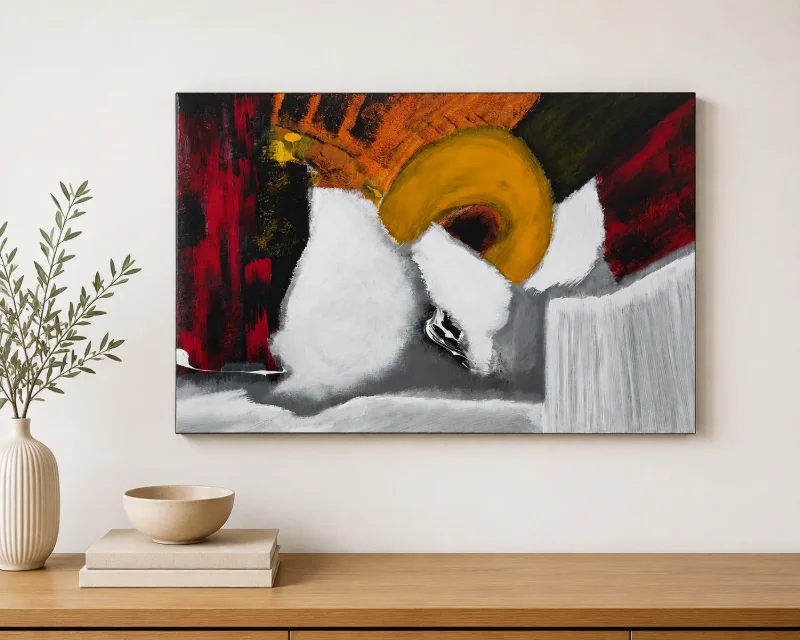
| Gold, amber, ochre | Warm, optimistic, glowing | Golden Threshold, Amber Serenity |
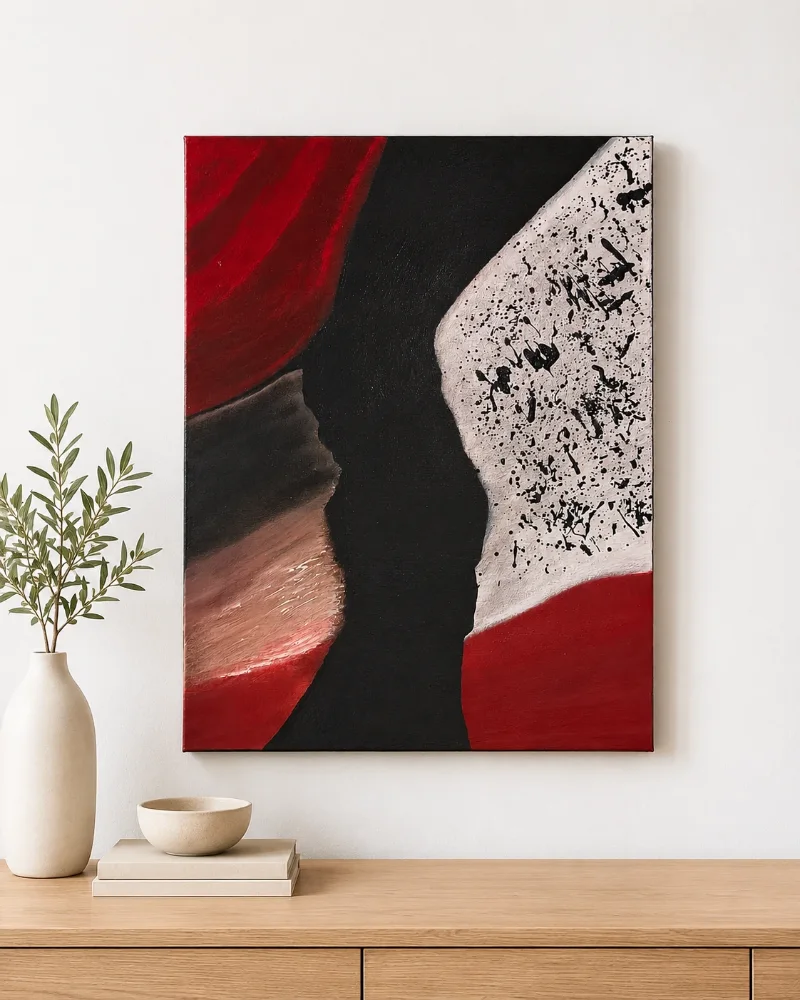
| Crimson, rose | Passionate, intimate, dramatic | The Conversation |
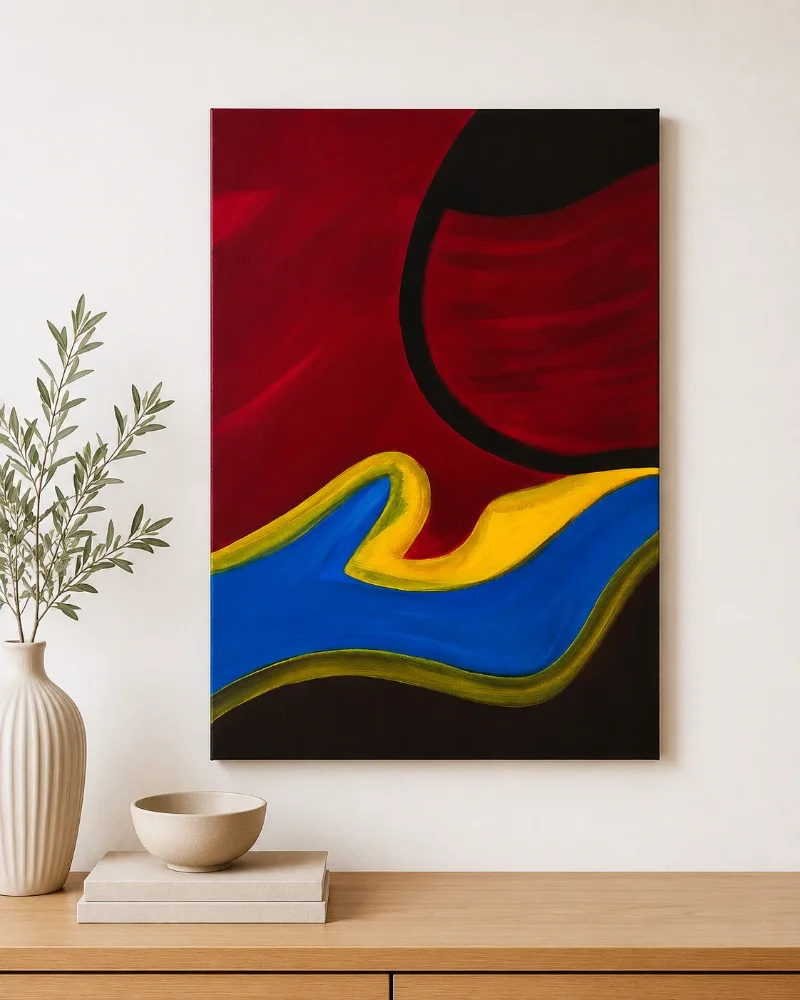
| Cobalt, indigo | Calm, deep, reflective | River of Home |
| Turquoise, emerald | Fresh, restorative, alive | Midnight Garden |
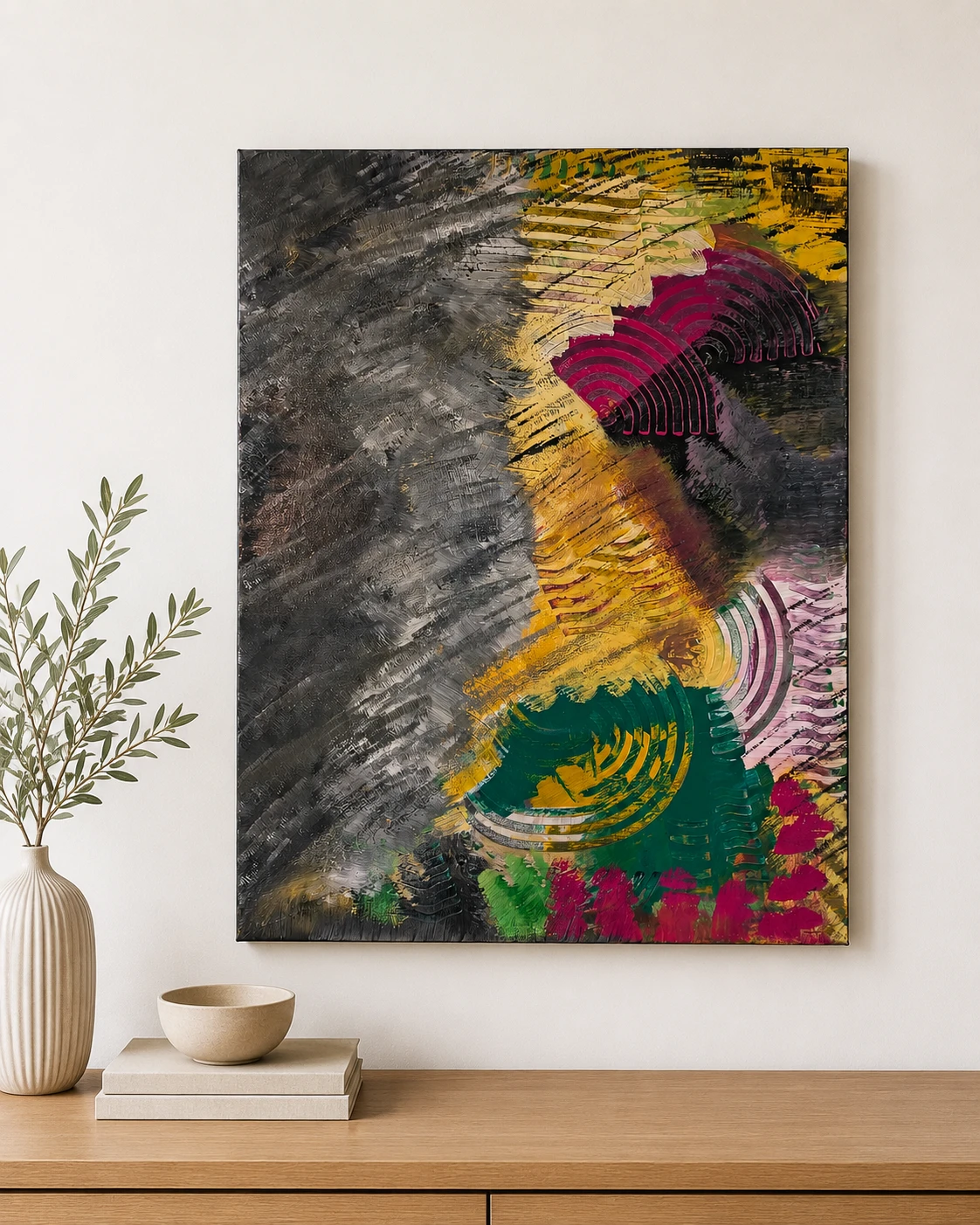
| Magenta with mixed brights | Energetic, joyful, musical | Echoes in Bloom |
Complementary colors (such as the blue and yellow in River of Home) create vibrancy; closely related colors create harmony and calm.
Harmony or contrast?
Harmony: pick up one or two colors already in the room (a cushion, a rug, wood tones) so the painting feels like it belongs. Contrast: choose a painting that differs boldly from its surroundings, such as a crimson canvas on a pale wall, so it becomes the room's focal point. Both work; just choose deliberately.
Room by room
Living room
Your boldest or largest painting usually belongs here, often above the sofa. Warm palettes feel welcoming in the evening. See what size art above a sofa.
 Original paintingGolden ThresholdAcrylic on canvas, 24 × 36 in · $260
View the painting →
Bedroom
Choose calm. Softer palettes, gentle compositions and generous negative space help a room feel restful.
Entryway and hallways
A first impression. A joyful, decorative or tall piece works beautifully, and narrow walls suit portrait canvases.
Dining room
Paintings that spark conversation shine here. Pieces with intrigue, such as The Conversation, give guests something to discuss.
Home office
Choose something that gives focus without distraction: rhythm and color in moderation.
Consider the light
Textured paintings change with the light. North-facing rooms have cool, even light that flatters calm palettes; warm evening lamplight makes gold and amber glow. If the painting has thick texture, hang it where light can rake across it from the side.
Trust your response
After all the guidelines: choose what moves you. The painting you keep looking at is the right one. For the full buying process, read how to buy original art.
Frequently asked questions
Should art match my sofa or decor?
It doesn't need to match exactly. Echo one or two colors from the room so the painting feels connected, or choose a deliberate contrast so it becomes the focal point.
What abstract art works in a bedroom?
Calm, cooler or softly warm paintings with gentle movement suit bedrooms best, for example Amber Serenity or Midnight Garden.
Can I mix abstract art with traditional furniture?
Yes. Abstract art often looks wonderful against traditional furniture; the contrast makes both feel fresher. Keep a common thread, such as a shared color or warm wood tones.