Key takeaways
- An original is unique: there is only one, and it carries real texture, depth and the artist's hand.
- Prints, including giclée and limited editions, are flat reproductions made in multiples.
- Originals from independent artists are often more affordable than people assume.
- If texture, uniqueness and story matter to you, choose an original.
Walk through any home store and you will see dozens of abstract "paintings" for sale. Most of them are prints: photographic reproductions on paper or canvas. So what do you actually gain by buying an original?
What counts as an original painting?
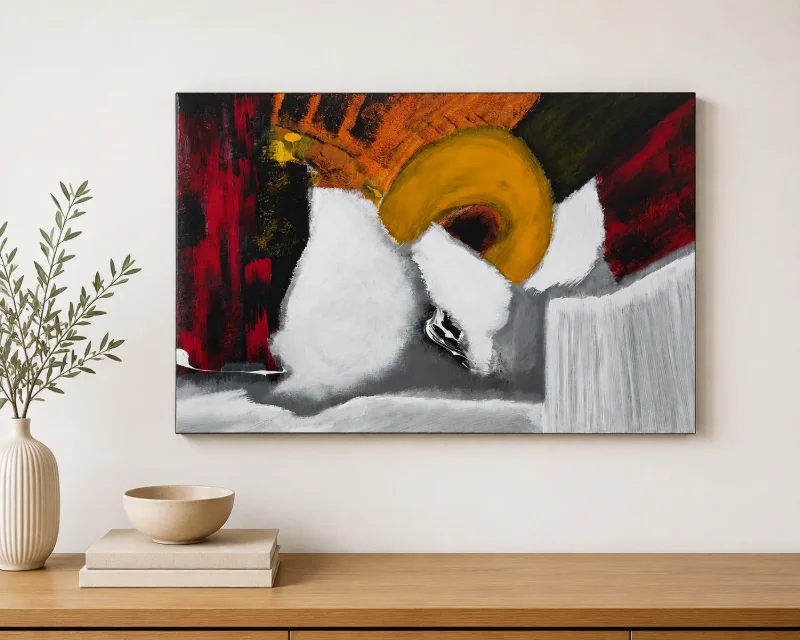
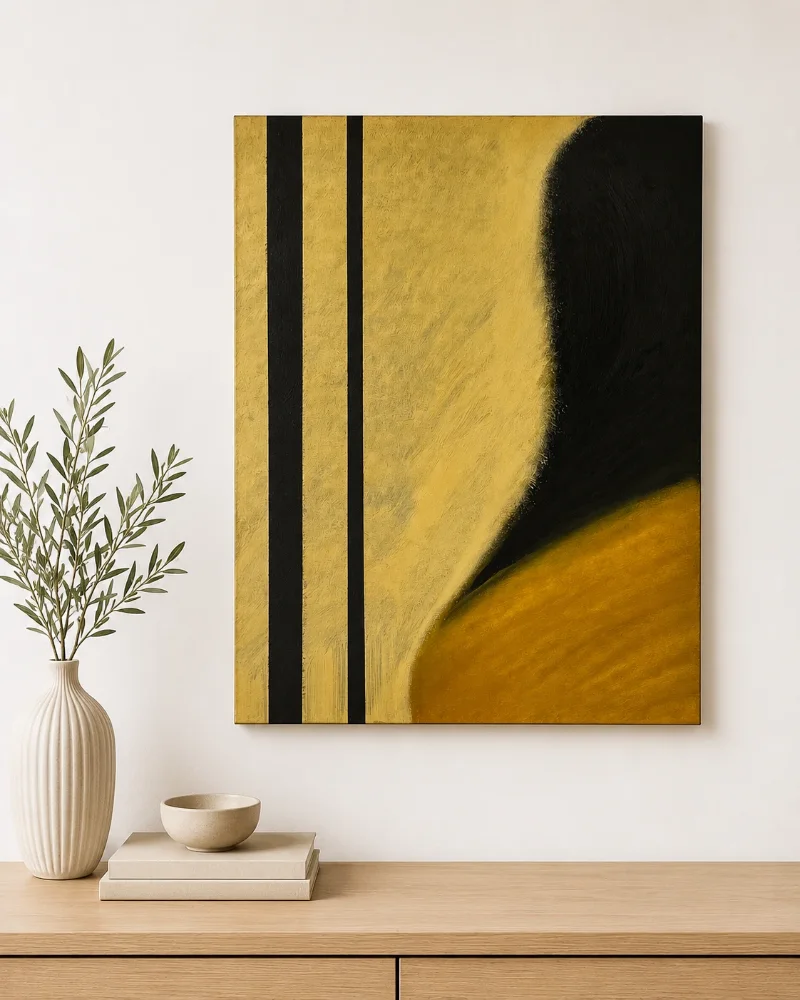
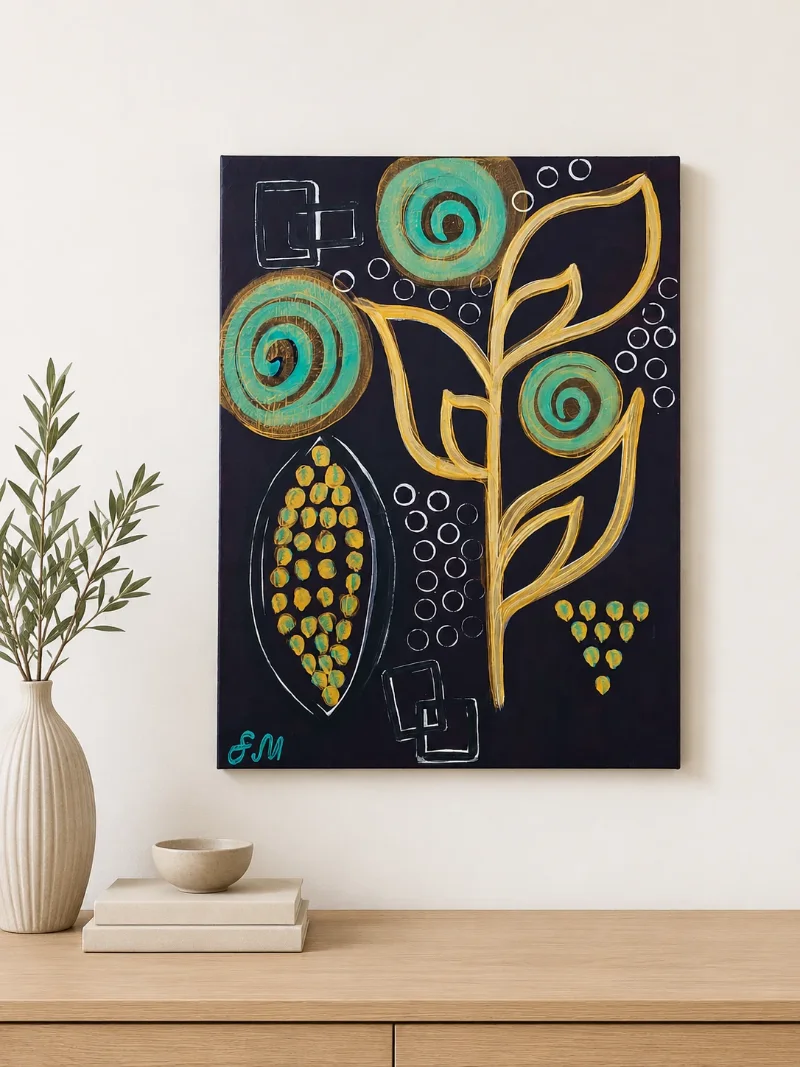
An original painting is made directly by the artist's hand, with real paint on a real surface. Every brushstroke, ridge and drip was placed there by a person. There is exactly one of it. Svitlana Morhunov's paintings, for example, are acrylic on stretched canvas, signed on the back by the artist.
What is a print?
A print is a copy. It may be a cheap poster, a canvas print or a high-end giclée made with archival inks. Some prints are sold as limited editions, numbered and signed, but there are still many identical copies.
Prints are a lovely way to enjoy art you couldn't otherwise own, such as a museum masterpiece. But they are not the thing itself.
The five differences that matter
| Original painting | Print or giclée | |
|---|---|---|
| Texture | Raised strokes, impasto, combed ridges and varied sheen | Flat surface that imitates texture |
| Color | Layered pigment with real depth; glazes glow | Limited to the printer's ink range |
| Uniqueness | One of a kind | Many identical copies |
| Story | Direct connection to the artist and provenance | Usually anonymous |
| Change over the day | Shifts with light as shadows move across the texture | Looks the same at all times |
Texture: the thing a photo can never show
Abstract painting depends on surface. In Echoes in Bloom, Svitlana drags a comb through wet paint (a technique called combing), leaving ridges that throw tiny shadows. In the morning the painting looks soft; in the evening, under a lamp, the ridges come alive. A print can photograph one moment of that. It can't reproduce the experience.
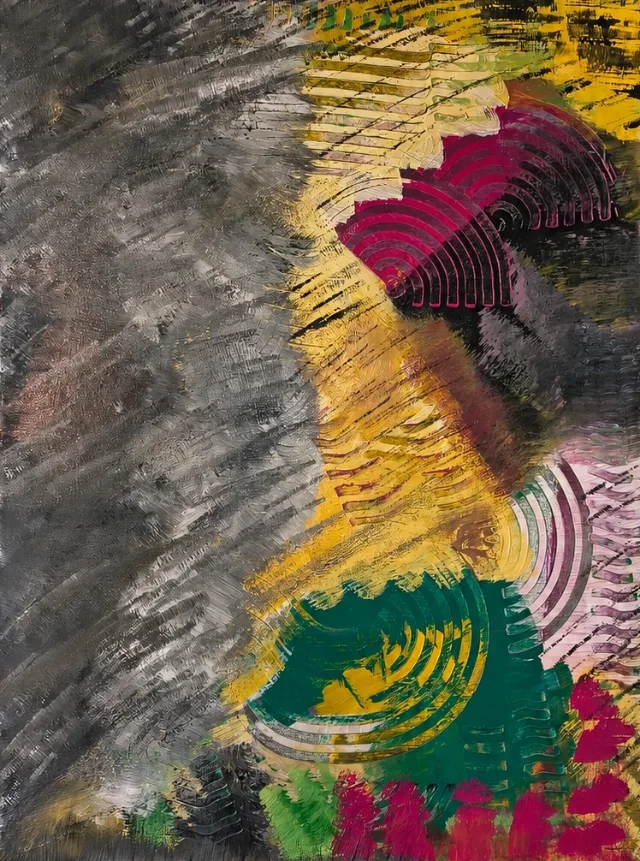 Original paintingEchoes in BloomAcrylic on canvas, 18 × 24 in · $180
View the painting →
Is an original painting worth the price?
Consider cost per year. A painting you love will hang in your home for decades, often moving with you from house to house. Spread over that time, an original from an independent artist costs very little, and it brings something no reproduction can.
It is also worth comparing real prices. A large framed canvas print from a retailer can cost as much as an original from an emerging artist. Svitlana's originals are $180 for 18 × 24 inches and $260 for 24 × 36 inches. More on that in how much does original art cost.
When a print makes sense
- You want a famous historical work you could never own.
- You need a very large piece on a very small budget.
- The art is for a short-term space, such as a rental you'll leave soon.
For a home you care about, and a wall where people will gather, an original gives you far more.
How to be sure you are buying an original
Ready to explore? See all original paintings, or start with the complete guide to buying original art.
Frequently asked questions
What is a giclée print?
A giclée is a high-quality inkjet reproduction made with archival inks. It can look very good, but it is a flat copy of an original artwork, not a painting.
Are original paintings much more expensive than prints?
Not always. Original work bought directly from an independent artist can cost less than a large framed print from a design store. Svitlana's originals start at $180.
Do original paintings hold their value?
An original is one of a kind, so it is never mass-produced. Whether it increases in monetary value depends on many factors, but its value as a unique object in your home is lasting. Buy primarily because you love it.
How can I tell if a painting is an original or a print?
Look at it in raking light from the side. An original shows raised brushstrokes, ridges and variations in sheen. A print is uniformly flat, and under magnification you may see a regular dot pattern.