Key takeaways
- Music and abstract painting share a vocabulary: rhythm, harmony, dynamics and resolution.
- Abstract pioneers such as Kandinsky explicitly linked color and sound.
- Svitlana's bachelor's degree in music shapes how she builds a painting, layer by layer.
People often say Svitlana Morhunov paints the way a musician plays. It's more than a metaphor. Before color became her instrument, Svitlana earned a bachelor's degree in music, and the habits of a musician (listening, layering, timing) run through every canvas she makes.
A shared language
Music and abstract painting both work without a literal subject. A symphony isn't "about" a thing the way a novel is, yet it moves us profoundly. Abstract painting works the same way, through structure and feeling. The vocabulary even overlaps: we speak of a painting's rhythm, its harmony, its tone, its dynamics.
| In music | In painting |
|---|---|
| Rhythm and repetition | Repeated marks, bands and shapes |
| Harmony | Colors that sit well together |
| Dissonance | Clashing or complementary colors that create tension |
| Dynamics (loud and soft) | Thick impasto versus thin glazes |
| Rests and silence | Negative space |
| Resolution | A composition that feels complete |
A long tradition
Many early abstract painters were inspired by music. Wassily Kandinsky, often credited with some of the first purely abstract paintings, wrote about color as something that could resonate like sound, and titled works "Compositions" and "Improvisations." Others painted fugues and jazz rhythms. Svitlana's work belongs to this lineage of painters who listen as they paint.
How music shapes Svitlana's process
Layering like an arrangement
A piece of music is built in parts: melody, harmony, rhythm. Svitlana builds paintings the same way, one layer over another, letting earlier layers show through like an accompaniment beneath a melody. The first underpainting sets the key.
Rhythm in the marks
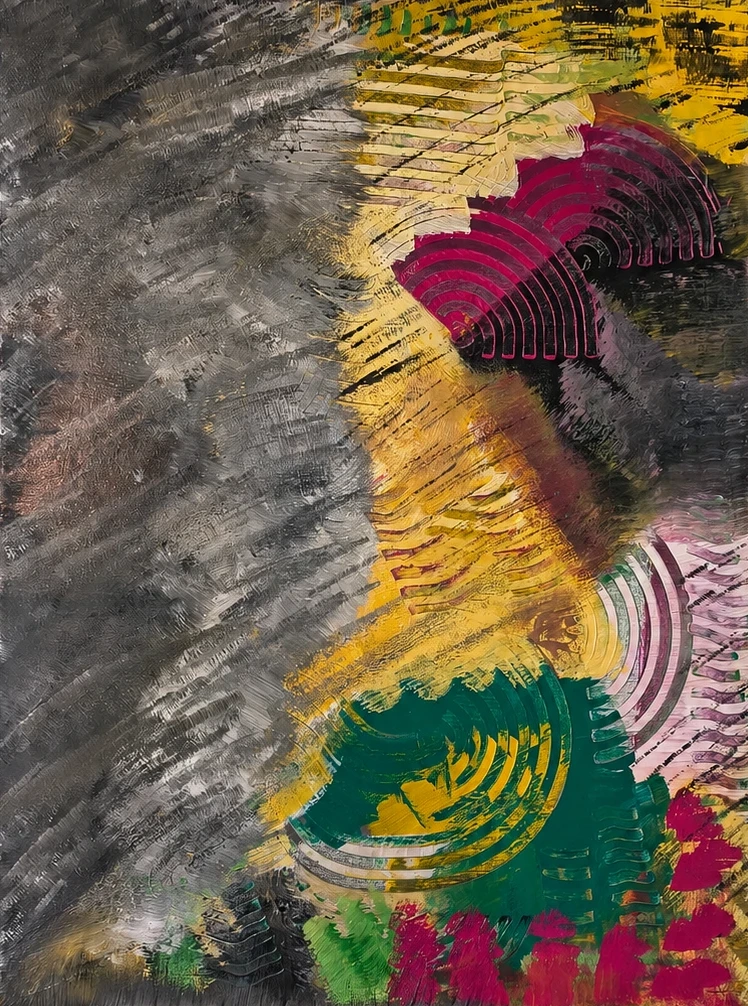
In Echoes in Bloom, she pulls a comb through wet paint so ridges repeat and vary like musical phrases. The ripples spread across the canvas like sound waves from a struck note.
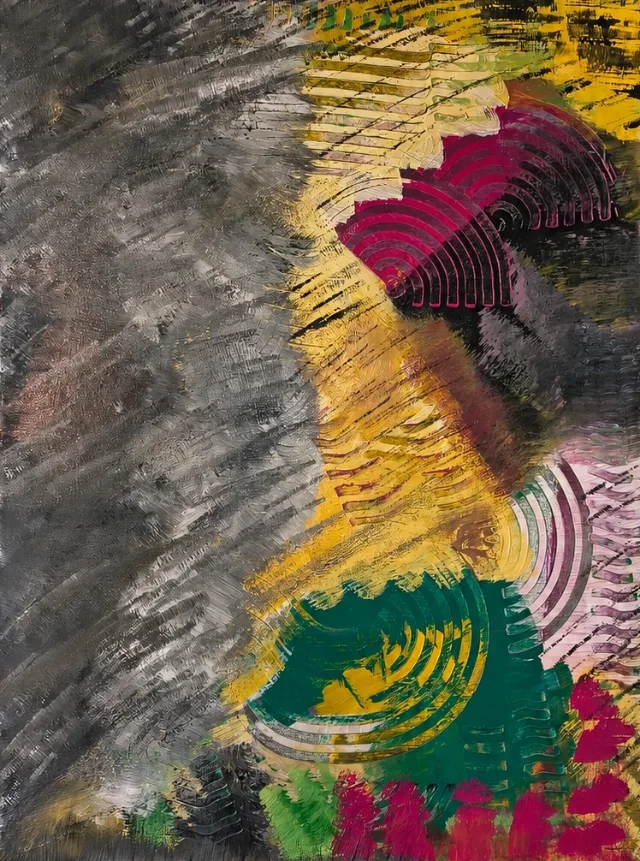 Original paintingEchoes in BloomAcrylic on canvas, 18 × 24 in · $180
View the painting →
Tension and resolution
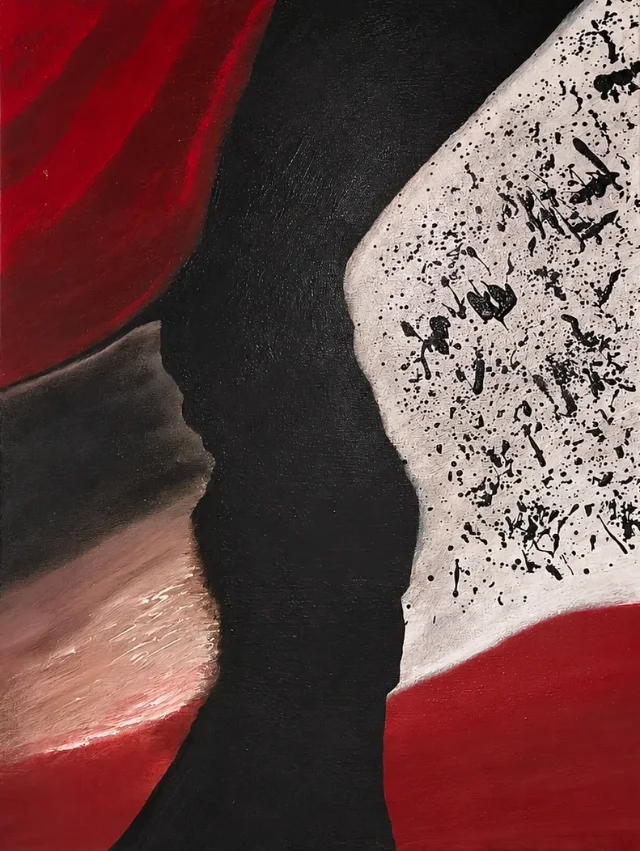
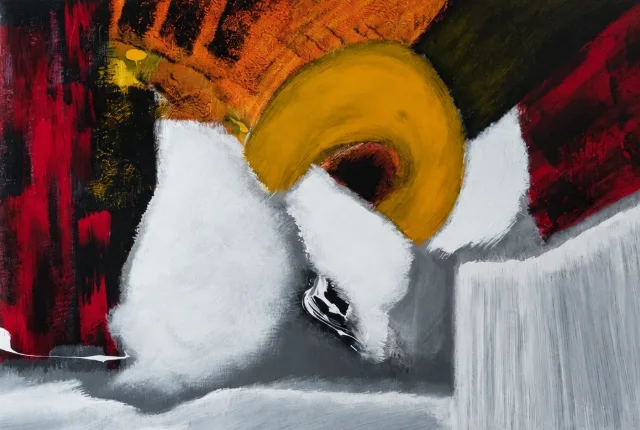
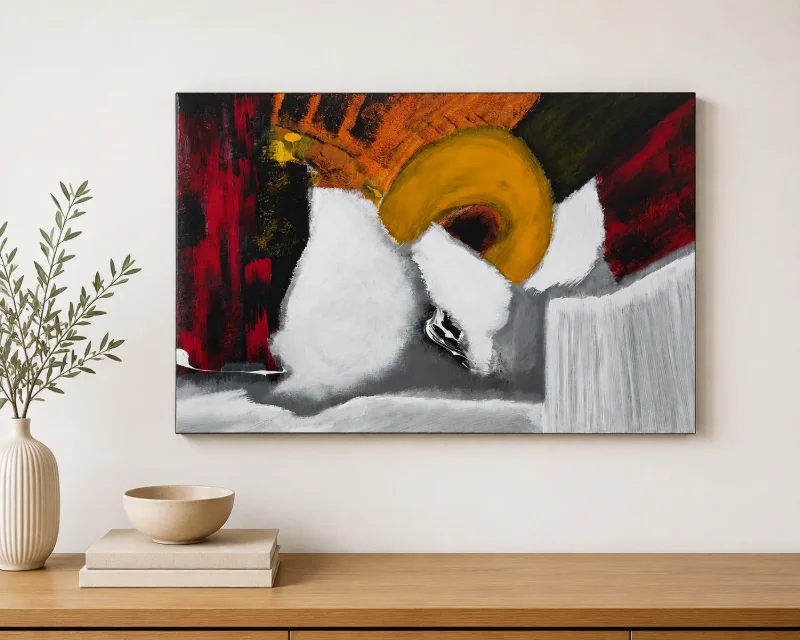
Music creates tension and then resolves it. In The Conversation, the dark divide between two forms holds a kind of unresolved chord. In Amber Serenity, a single amber curve feels like the final, quiet note of a phrase.
Listening to a painting
Next time you look at an abstract painting, try "listening." Where are the loud passages and the quiet ones? Is there a beat? Does the painting build to a climax or hold a long, sustained tone? You may find, as many collectors of Svitlana's work do, that you experience the painting more fully. For more ways of looking, read how to understand abstract art.
Learn more about the artist, or explore the paintings.
Frequently asked questions
Can you really 'hear' a painting?
Not literally, but painting and music share structural ideas such as rhythm, repetition, contrast and resolution, so many people experience abstract paintings in a musical way.
Which painting is the most musical?
Echoes in Bloom is the most directly musical: its combed ripples repeat and vary like phrases, spreading across the canvas like sound waves.